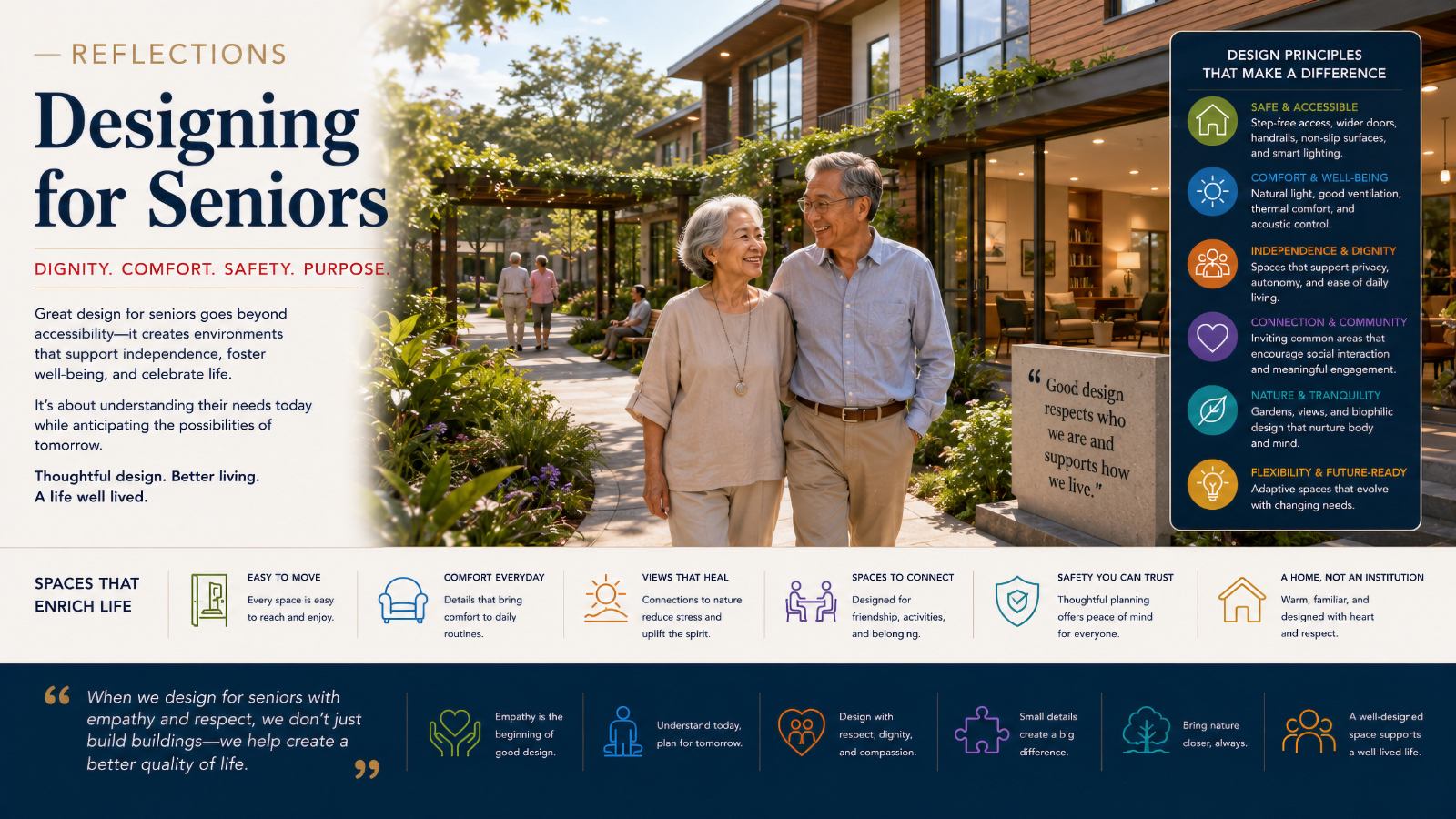
Designing for seniors has become increasingly meaningful to me—not only as an architect, but also as someone who has entered his own senior years. With age comes a deeper appreciation of how our surroundings influence our comfort, independence, and overall quality of life. A thoughtfully designed home or retirement community is not simply a place to live; it is a place where people continue to thrive, remain connected, and enjoy life with dignity.
Too often, senior housing is viewed purely from the standpoint of accessibility. While safety is certainly essential, great design goes much further. It creates environments that celebrate living rather than merely accommodating aging.
Thoughtful design leads to better living—and ultimately, to a life well lived.
Designing Safe and Accessible Homes for Seniors
Safety is the foundation of every successful senior-oriented design.
Simple architectural decisions can significantly reduce the risk of accidents. Step-free entrances, wider doorways, non-slip flooring, strategically placed handrails, adequate lighting, and barrier-free bathrooms all contribute to a home that remains functional for many years.
Good accessibility should never feel institutional. Instead, it should blend naturally into the architecture so that every resident enjoys comfort without being constantly reminded of physical limitations.
The best accessible design is often the one that goes unnoticed because it simply works.
Creating Comfortable Living Spaces That Support Well-Being
Comfort extends far beyond furniture and finishes.
Natural daylight, cross ventilation, acoustic control, and carefully planned indoor temperatures all contribute to physical and emotional well-being. Comfortable spaces encourage seniors to remain active, independent, and engaged with everyday life.
Small details also matter. Easy-to-reach switches, convenient storage, thoughtfully designed kitchens, and comfortable seating areas simplify daily routines and reduce unnecessary effort.
Architecture should quietly support life rather than complicate it.
Preserving Independence and Dignity Through Thoughtful Design
One of the greatest gifts architecture can provide is independence.
Well-designed homes enable seniors to continue managing their daily lives confidently and safely. Privacy, personal choice, and freedom of movement all contribute to maintaining dignity as needs gradually evolve over time.
Design should never communicate weakness. Instead, it should empower individuals to live as independently as possible while providing subtle support when needed.
Respectful design acknowledges that every stage of life deserves thoughtful attention
Why Community Spaces Matter in Senior Living
People flourish when they remain connected to others.
Shared gardens, walking paths, shaded courtyards, activity rooms, libraries, and comfortable gathering spaces encourage conversation, friendship, and meaningful engagement. These places become the heart of a community, reducing isolation while fostering a sense of belonging.
Architecture has the unique ability to bring people together without forcing interaction. Well-designed common spaces naturally encourage relationships while respecting personal privacy.
Buildings should create opportunities for community as much as they create shelter.
Bringing Nature into Senior Residential Design
Nature has a remarkable ability to restore both body and mind.
Gardens, trees, water features, flowering landscapes, and generous views create calming environments that reduce stress and promote emotional well-being. Large windows invite daylight indoors, while outdoor terraces and walking paths encourage gentle exercise and daily connection with nature.
Biophilic design is particularly valuable for seniors because it strengthens the relationship between people and the natural world, contributing to healthier and more enjoyable living environments.
Sometimes the most therapeutic feature of a building is simply a beautiful garden waiting outside.
Designing Homes That Adapt to Changing Needs
A successful senior residence should continue serving its occupants for many years.
Flexible spaces that accommodate changing mobility, future medical equipment, or visiting caregivers provide long-term value without requiring major renovations. Planning ahead allows homes to evolve gracefully alongside the people who live in them.
Future-ready design benefits not only seniors but also younger families who may eventually care for aging parents within the same home.
Good architecture anticipates tomorrow while meeting today's needs.
A Home That Celebrates Life
Perhaps the most important lesson I have learned is that designing for seniors is not about aging—it is about living well.
Every architectural decision should reflect empathy, compassion, and respect for those who have spent a lifetime building families, careers, and communities. They deserve homes that are safe without feeling restrictive, beautiful without being extravagant, and welcoming rather than institutional.
When we design with dignity, comfort, and purpose, we do far more than create buildings. We create places where memories continue to be made, friendships continue to grow, and every stage of life can be lived with confidence and joy.
In the end, the finest senior communities are not remembered for their architecture alone, but for the quality of life they make possible. That is, perhaps, the highest calling of thoughtful architectural design.